Peptide Storage Guidelines: Preserving Compound Integrity in the Lab
Proper peptide storage guidelines are essential knowledge for any research laboratory working with these sensitive biological compounds. Peptides are susceptible to degradation through hydrolysis, oxidation, aggregation, and microbial contamination – and improper storage is the leading cause of failed experiments and irreproducible results. This guide covers everything you need to know about maintaining peptide integrity from receipt through the end of your study.
Lyophilized (Powder) Peptide Storage
When you receive lyophilized peptides, they are in their most stable form. Proper storage of the dry powder is straightforward but critical:
Temperature Requirements
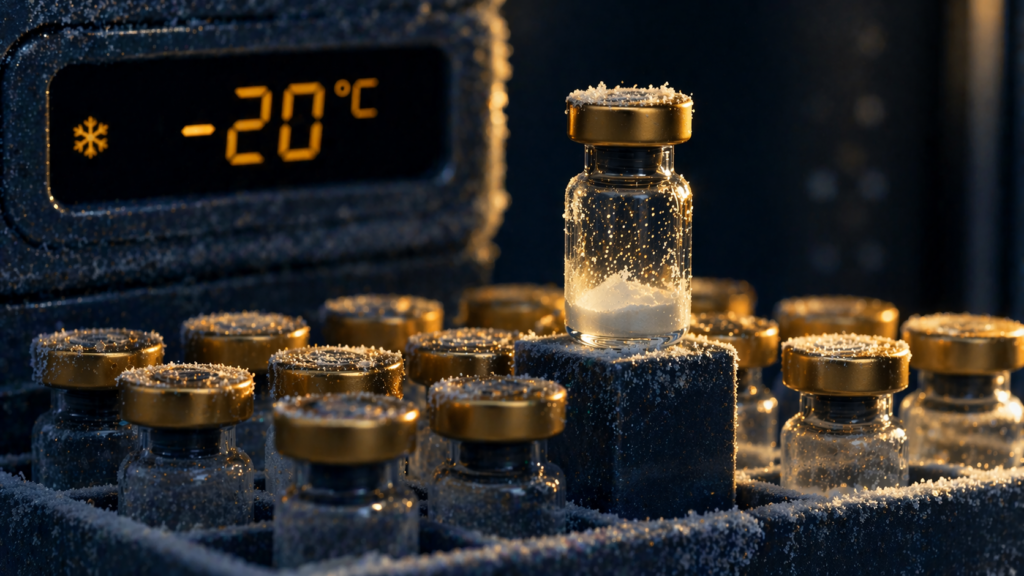
- Long-term storage (months to years): -20°C to -80°C freezer. This is the gold standard for maintaining peptide integrity over extended periods.
- Medium-term storage (weeks to months): 2-8°C (standard laboratory refrigerator) is acceptable for most peptides.
- Short-term storage (days): Room temperature is generally acceptable for stable peptides in sealed containers, though refrigeration is always preferred.
Moisture Protection
Lyophilized peptides are hygroscopic – they readily absorb moisture from the atmosphere. Moisture absorption initiates hydrolysis reactions that degrade the peptide bond. To prevent this:
- Keep vials sealed with intact septum caps until ready for reconstitution
- If using screw-cap vials, wrap with parafilm around the cap-vial junction
- Include desiccant packets in the storage container
- When removing from freezer storage, allow the sealed vial to equilibrate to room temperature before opening (15-20 minutes) to prevent condensation on the cold powder
Light Protection
UV and visible light can cause photodegradation, particularly in peptides containing tryptophan, tyrosine, or phenylalanine residues. Store peptides in amber vials or wrap clear vials in aluminum foil. Keep storage areas dark when not accessing compounds.
Reconstituted (Solution) Peptide Storage
Once reconstituted, peptides become significantly less stable. Key guidelines for solution storage:
Solvent Selection
- Bacteriostatic water: Preferred for peptides that will be used over multiple days. The 0.9% benzyl alcohol preservative inhibits microbial growth.
- Sterile water: Suitable for single-use aliquots or immediate use within 24 hours.
- Buffer solutions: Use peptide-compatible buffers (PBS, Tris, HEPES) at appropriate pH for your specific peptide.
Temperature for Solutions
- Active use: Store at 2-8°C between uses. Most reconstituted peptides maintain stability for 2-4 weeks refrigerated.
- Extended storage: Aliquot and freeze at -20°C. Avoid repeated freeze-thaw cycles (maximum 3 cycles recommended).
Aliquoting Strategy
The most effective way to prevent freeze-thaw degradation is to aliquot your reconstituted peptide into single-use portions immediately after reconstitution. Use sterile, low-protein-binding microcentrifuge tubes and freeze immediately. This way, each experimental use involves thawing only one tube.
Peptide-Specific Considerations
Some peptides require special attention:
- Cysteine-containing peptides: Prone to disulfide bond formation and oxidation. Store under inert gas (nitrogen or argon) when possible. Add reducing agents like DTT only if compatible with your assay.
- Methionine-containing peptides: Susceptible to oxidation to methionine sulfoxide. Minimize air exposure and consider adding antioxidants to storage solutions.
- Large peptides (>30 residues): More prone to aggregation. Store at lower concentrations and avoid high salt conditions.
- Highly hydrophobic peptides: May require DMSO or DMF for initial dissolution before dilution into aqueous solutions.
Signs of Peptide Degradation
Monitor stored peptides for these indicators of degradation:
- Change in powder appearance (yellowing, clumping, crystallization)
- Difficulty dissolving after reconstitution
- Visible precipitate or cloudiness in solution
- Unexpected experimental results compared to fresh preparation
- Shift in HPLC retention time if you re-analyze stored samples
Documentation and Lab Practices
Maintain records for each peptide in your inventory: receipt date, storage location, reconstitution date, solvent used, concentration, number of freeze-thaw cycles, and any visual observations. This documentation is essential for troubleshooting experiments and meets good laboratory practice standards.
Disclaimer: All products sold by Aureum Peptides are intended for laboratory and research use only. Not for human consumption. No statements on this page have been evaluated by the FDA. This product is not intended to diagnose, treat, cure, or prevent any disease. For Research Use Only.