NAD+ Research: Understanding the Coenzyme at the Center of Cellular Metabolism
NAD+ research has become one of the most active areas of investigation in molecular biology and biochemistry. Nicotinamide adenine dinucleotide (NAD+) is a coenzyme found in every living cell, serving as a critical electron carrier in metabolic reactions and a substrate for signaling enzymes that regulate numerous cellular processes. The surge in published research reflects growing scientific interest in understanding how NAD+ metabolism influences fundamental cellular functions.
Aureum Peptides supplies research-grade NAD+ and related compounds for qualified laboratory investigations.
NAD+ Biosynthesis Pathways
Cells maintain NAD+ levels through three distinct biosynthetic pathways:
De novo synthesis (Kynurenine pathway): Converts the essential amino acid tryptophan through a multi-step enzymatic cascade involving IDO, TDO, and QPRT to produce NAD+. This pathway is quantitatively minor in most tissues but significant in the liver.
Salvage pathway (Nampt pathway): Recycles nicotinamide (NAM) back to NAD+ via nicotinamide phosphoribosyltransferase (NAMPT) and nicotinamide mononucleotide adenylyltransferases (NMNATs). This is the dominant pathway for NAD+ maintenance in most tissues.
Preiss-Handler pathway: Converts nicotinic acid (NA/niacin) to NAD+ through nicotinic acid phosphoribosyltransferase (NAPRT). This dietary-input pathway connects NAD+ levels directly to vitamin B3 intake.
NAD+ as an Enzyme Substrate
Beyond its role in redox reactions (where it shuttles electrons as NAD+/NADH), NAD+ serves as a consumed substrate for three major enzyme families:
Sirtuins (SIRT1-7)
These NAD+-dependent deacetylases and ADP-ribosyltransferases regulate gene expression, DNA repair, mitochondrial function, and metabolic homeostasis. Each sirtuin localizes to different cellular compartments – nucleus (SIRT1, 6, 7), cytoplasm (SIRT2), and mitochondria (SIRT3, 4, 5) – controlling distinct biological processes. Sirtuin activity is directly dependent on NAD+ availability, making NAD+ levels a potential regulator of sirtuin function.
PARPs (Poly-ADP-Ribose Polymerases)
These enzymes consume NAD+ to synthesize poly-ADP-ribose chains on target proteins, primarily in DNA damage response pathways. PARP1 alone can consume large quantities of NAD+ during genotoxic stress, significantly impacting cellular NAD+ pools.
CD38/CD157
These ectoenzymes catalyze the hydrolysis of NAD+ to produce cyclic ADP-ribose (cADPR) and nicotinamide, functioning in calcium signaling and immune regulation. CD38 is increasingly recognized as a major NAD+ consumer, and its expression changes are studied in various biological contexts.
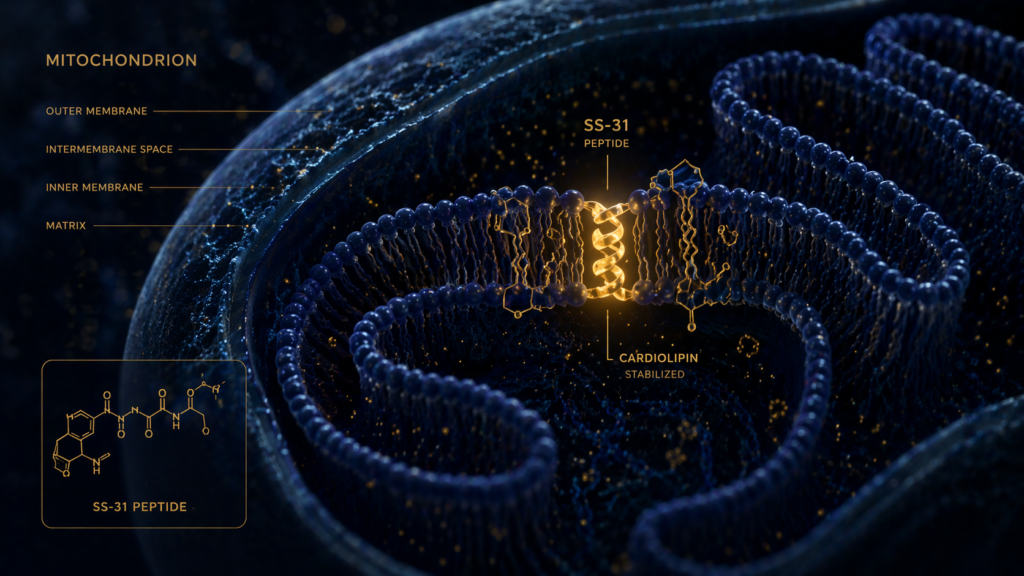
Mitochondrial Function and NAD+
NAD+ plays an indispensable role in mitochondrial metabolism. The mitochondrial NAD+ pool supports:
- The tricarboxylic acid (TCA/Krebs) cycle – multiple dehydrogenases require NAD+ as an electron acceptor
- The electron transport chain – NADH delivers electrons to Complex I for oxidative phosphorylation
- Mitochondrial sirtuin activity (SIRT3, 4, 5) – regulating metabolic enzyme acetylation
- Beta-oxidation of fatty acids – NAD+-dependent steps in lipid catabolism
Researchers studying mitochondrial function can explore our Mitochondrial Pathway Research Bundle, which pairs NAD+ with complementary research compounds.
Current Research Frontiers
Active areas of NAD+ research include:
- NAD+ and aging biology: Studies examining the relationship between NAD+ decline and age-related cellular changes (Imai & Guarente, 2014)
- Neurological research: Investigation of NAD+ metabolism in neuronal cell models and neurodegenerative disease models
- Metabolic research: Studies on NAD+ involvement in insulin sensitivity and lipid metabolism pathways
- DNA repair: Research on NAD+-dependent PARP activity and genome maintenance mechanisms
- Circadian biology: NAMPT and NAD+ oscillation in clock gene regulation (Ramsey et al., 2009)
NAD+ Research Compounds
Researchers study NAD+ biology using several related compounds:
- NAD+ (direct): For in vitro studies examining direct NAD+ effects
- NMN (Nicotinamide Mononucleotide): A direct NAD+ precursor in the salvage pathway
- NR (Nicotinamide Riboside): Another NAD+ precursor that enters the salvage pathway
- Nicotinamide (NAM): The amide form of vitamin B3, recycled via NAMPT
Aureum Peptides provides research-grade NAD+ with full COA documentation and 99%+ purity verification.
Disclaimer: All products sold by Aureum Peptides are intended for laboratory and research use only. Not for human consumption. No statements on this page have been evaluated by the FDA. This product is not intended to diagnose, treat, cure, or prevent any disease. For Research Use Only.